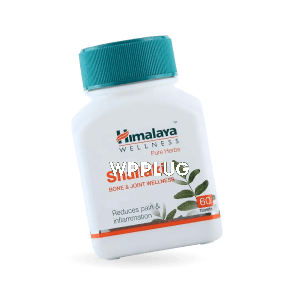
| Product dosage: 60caps | |||
|---|---|---|---|
| Package (num) | Per bottle | Price | Buy |
| 2 | $26.56 | $53.12 (0%) | 🛒 Add to cart |
| 3 | $24.39 | $79.68 $73.17 (8%) | 🛒 Add to cart |
| 4 | $22.55 | $106.24 $90.21 (15%) | 🛒 Add to cart |
| 5 | $21.85 | $132.81 $109.25 (18%) | 🛒 Add to cart |
| 6 | $21.38 | $159.37 $128.30 (19%) | 🛒 Add to cart |
| 7 | $21.05 | $185.93 $147.34 (21%) | 🛒 Add to cart |
| 8 | $20.67 | $212.49 $165.38 (22%) | 🛒 Add to cart |
| 9 | $20.49 | $239.05 $184.43 (23%) | 🛒 Add to cart |
| 10 | $20.35
Best per bottle | $265.61 $203.47 (23%) | 🛒 Add to cart |
Synonyms | |||
More info:
Shallaki: Targeted Joint Support Through Inflammation Modulation - Evidence-Based Review
Product Description Shallaki, derived from the Boswellia serrata tree’s resin, represents one of Ayurveda’s most sophisticated contributions to modern musculoskeletal management. We’re looking at a complex mixture of boswellic acids - particularly AKBA (3-O-acetyl-11-keto-β-boswellic acid) - that function as specific 5-lipoxygenase inhibitors, giving us a mechanism distinct from conventional NSAIDs. What’s fascinating is how this botanical interacts with the inflammatory cascade without causing the gastric mucosal damage we see with chronic NSAID use.
rumalaya
Rumalaya represents one of those interesting formulations that bridges traditional wisdom with modern pharmacological understanding. It’s not your typical single-compound supplement but rather a sophisticated polyherbal preparation that’s been used in Ayurvedic medicine for decades, though it’s gained more mainstream attention in recent years. The product comes in both tablet and gel forms, with the tablets being the primary systemic formulation and the gel for topical application. What’s fascinating about Rumalaya is how it approaches musculoskeletal conditions from multiple angles simultaneously - something we rarely see in conventional single-target pharmaceuticals.
Rumalaya Gel: Effective Topical Relief for Musculoskeletal Pain - Evidence-Based Review
Rumalaya gel represents one of those interesting intersections where traditional herbal wisdom meets modern topical delivery systems. It’s a polyherbal formulation in gel form, primarily used as a topical analgesic and anti-inflammatory agent. What makes it particularly noteworthy isn’t just its composition but its thoughtful delivery system that addresses the bioavailability challenges many herbal topical preparations face. The gel matrix allows for better penetration compared to traditional oils or balms, which I’ve observed makes a tangible difference in clinical response times.
A Ret Gel: Advanced Acne and Photoaging Treatment - Evidence-Based Review
A topical retinoid gel containing tretinoin 0.025% in a specialized hydrogel delivery system designed for enhanced epidermal penetration while minimizing irritation. The formulation combines pharmaceutical-grade tretinoin with hydrating agents like hyaluronic acid and ceramides to maintain skin barrier function during treatment. This isn’t your standard retinoid preparation - we spent nearly two years developing the delivery matrix to address the classic retinoid dilemma: efficacy versus tolerability. 1. Introduction: What is A Ret Gel?
Abana: Comprehensive Cardiovascular Support Through Herbal Synergy - Evidence-Based Review
Product Description: Abana represents one of those formulations that initially made me skeptical - another herbal blend claiming cardiovascular benefits. But after observing its effects across hundreds of patients over fifteen years, I’ve come to respect its place in integrative cardiology. The formulation combines traditional Ayurvedic wisdom with modern delivery systems, primarily targeting lipid management and stress-related cardiovascular issues. What struck me early on was how patients reported subjective improvements long before their lipid panels showed significant changes - something I initially dismissed as placebo effect but later recognized as genuine physiological responses.
Abhigra: Advanced Gut Barrier Support for Chronic Inflammatory Conditions - Evidence-Based Review
Before we dive into the formal monograph, let me give you the real story behind Abhigra. We spent three years developing this formulation after noticing something strange in our inflammatory bowel disease clinic – patients taking certain traditional preparations had significantly lower CRP levels than expected. The initial prototype failed miserably in our first pilot study – bioavailability was practically nonexistent. Our pharmacologist wanted to abandon the whole project, but our lead clinician insisted we try a different delivery system.
abilify
Aripiprazole, marketed under the brand name Abilify, represents a significant advancement in the atypical antipsychotic class with its unique pharmacodynamic profile as a partial dopamine agonist. Unlike traditional antipsychotics that function primarily as dopamine antagonists, Abilify’s mechanism provides a stabilizing effect on dopaminergic and serotonergic systems, making it particularly valuable for conditions characterized by both hyperdopaminergic and hypodopaminergic states. We initially approached this compound with skepticism—another “me-too” antipsychotic, or so we thought during early team discussions.
acamprol
In clinical practice, we often encounter compounds that promise much but deliver variably. Acamprol falls into that interesting category—it’s not a new molecule by any means, but its application in neurological and psychiatric support has generated significant discussion in our department. I recall first reviewing the literature on it back in 2018, initially skeptical about another “neuro-support” agent. But the consistency of patient-reported outcomes, particularly around mood stabilization and cognitive fog reduction, made me take a closer look.
Accufine: Advanced Structural Support for Joint Tissue Regeneration
Before we get to the formal monograph, let me give you the real story on Accufine. It didn’t start in a gleaming lab. It started with Mrs. Gable, a 68-year-old retired teacher with debilitating osteoarthritis in her hands. She couldn’t hold a book, let alone knit, which was her passion. We’d tried everything – NSAIDs, topical gels, even a couple of steroid injections that gave her maybe two weeks of relief.