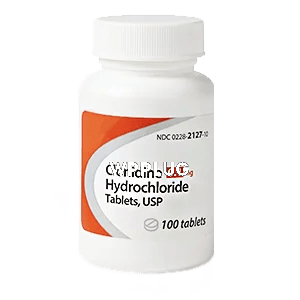
| Product dosage: 0.1mg | |||
|---|---|---|---|
| Package (num) | Per pill | Price | Buy |
| 10 | $4.01 | $40.05 (0%) | 🛒 Add to cart |
| 20 | $2.25 | $80.10 $45.06 (44%) | 🛒 Add to cart |
| 30 | $1.67 | $120.15 $50.06 (58%) | 🛒 Add to cart |
| 90 | $0.67 | $360.46 $60.08 (83%) | 🛒 Add to cart |
| 120 | $0.54 | $480.61 $65.08 (86%) | 🛒 Add to cart |
| 180 | $0.39 | $720.91 $70.09 (90%) | 🛒 Add to cart |
| 270 | $0.30 | $1081.37 $80.10 (93%) | 🛒 Add to cart |
| 360 | $0.26
Best per pill | $1441.83 $95.12 (93%) | 🛒 Add to cart |
Synonyms
| |||
More info:
clonidine
Clonidine is a centrally acting alpha-2 adrenergic agonist that’s been in clinical use for decades, originally developed as a nasal decongestant before its potent antihypertensive properties were discovered. What’s fascinating about this medication is how its mechanism—primarily reducing sympathetic outflow from the central nervous system—has led to applications far beyond blood pressure control. We’ve found it particularly valuable in managing withdrawal symptoms, ADHD, and certain pain conditions, though the dosing and monitoring requirements differ significantly across these indications.
combipres
Combipres represents one of those interesting clinical tools that sits right at the intersection of pharmaceutical intervention and behavioral management. It’s essentially a combination product – clonidine hydrochloride and chlorthalidone – designed for hypertension management, but over the years we’ve found it does some pretty remarkable things with certain autonomic nervous system dysregulations that pure beta-blockers or ACE inhibitors just can’t touch. I remember when we first started working with this formulation back in my residency at Mass General.
coreg
Carvedilol, marketed under the brand name Coreg, represents a significant advancement in cardiovascular pharmacotherapy as a third-generation non-selective beta-blocker with additional alpha-1 adrenergic blocking properties. This unique dual mechanism distinguishes it from earlier beta-blockers and expands its therapeutic applications beyond conventional beta-blockade. Initially developed for hypertension management, carvedilol’s clinical utility has expanded to include heart failure with reduced ejection fraction, post-myocardial infarction management, and certain arrhythmias. The drug’s ability to simultaneously block β1, β2, and α1 receptors creates a hemodynamic profile that reduces peripheral vascular resistance while maintaining cardiac output—a distinct advantage over traditional beta-blockers that can reduce cardiac output through pure negative inotropic effects.
innopran xl
Propranolol hydrochloride extended-release capsules - we’re talking about one of those foundational cardiovascular agents that somehow manages to stay relevant decade after decade. The 80 mg, 120 mg, and 160 mg strengths in this particular formulation represent what I’d call elegant pharmaceutical engineering, using a proprietary diffusion-controlled osmotic pump system (the OROS technology) that delivers consistent 24-hour beta-blockade. What’s fascinating clinically is how this old molecule keeps finding new applications beyond its original hypertension and angina indications.
lopressor
Metoprolol tartrate, marketed under the brand name Lopressor, represents one of the foundational beta-blockers in cardiovascular medicine. This selective β1-adrenergic receptor antagonist has been a workhorse in clinical practice for decades, primarily used in the management of hypertension, angina pectoris, and following myocardial infarction. Its mechanism centers on competitively blocking catecholamine effects on the heart, resulting in reduced heart rate, decreased myocardial contractility, and lowered blood pressure. What’s fascinating about Lopressor isn’t just its efficacy—it’s how this relatively simple molecule has maintained clinical relevance despite the proliferation of newer antihypertensive agents.
strattera
Strattera, known generically as atomoxetine, represents a significant departure from traditional stimulant-based treatments for ADHD. As a selective norepinephrine reuptake inhibitor, it works through a distinct mechanism that many clinicians find advantageous for certain patient populations, particularly those with comorbid anxiety or substance use concerns. Unlike stimulants that primarily affect dopamine, Strattera’s focus on norepinephrine modulation creates a different clinical profile that’s worth understanding in depth. Strattera: Non-Stimulant ADHD Management with Sustained Efficacy 1.
tizanidine
Tizanidine hydrochloride is a centrally acting alpha-2 adrenergic agonist primarily indicated for the management of spasticity. It’s fascinating how this imidazoline derivative has become such a workhorse in our spasticity management toolkit, particularly given its complex pharmacokinetic profile. When I first started using it back in the late 90s, we were still figuring out the optimal dosing strategies - the short half-life really keeps you on your toes clinically. Tizanidine: Effective Muscle Spasticity Management - Evidence-Based Review 1.
Tofranil: Multimodal Therapeutic Action for Complex Neuropsychological Conditions - Evidence-Based Review
Imipramine hydrochloride, marketed under the brand name Tofranil, represents one of the foundational tricyclic antidepressants (TCAs) that fundamentally reshaped psychiatric pharmacotherapy. First synthesized in the 1950s by Geigy Pharmaceuticals, this dibenzazepine derivative emerged from systematic molecular modifications of phenothiazine antipsychotics, leading to the unexpected discovery of its potent antidepressant properties. As a tertiary amine TCA, Tofranil’s clinical significance extends beyond its initial indication for major depressive disorder to include numerous off-label applications that reflect its complex pharmacodynamic profile.
Toprol XL: Comprehensive Cardiovascular Protection - Evidence-Based Review
Product Description Toprol XL represents one of those foundational cardiovascular medications that fundamentally changed how we approach hypertension and angina management in clinical practice. As metoprolol succinate in its extended-release formulation, this beta-blocker provides 24-hour coverage with single daily dosing - something we’d been desperately needing back when I was first starting in cardiology in the early 2000s. The development team at AstraZeneca really nailed something special with the OROS delivery system that maintains consistent plasma concentrations.